



Green Infrastructure/ Low Impact Development
LID and GI form a ‘treatment train’ approach to stormwater management. They work together at both the site and regional scale.
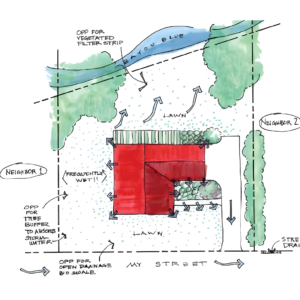
Mapping Your Site
Property owners interested in applying low impact development strategies, can conduct a basic site analysis by mapping your property.
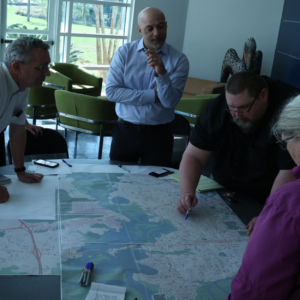
Prioritize. Plan. Prepare.
Determine primary concerns, research existing conditions, and prime your site!
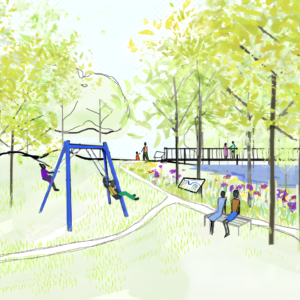
Infiltration Landscape
Practices to promote infiltration of stormwater into native soils to prevent erosion and flooding.
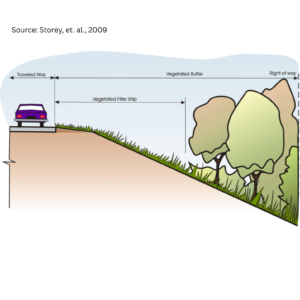
Vegetated Filter Strip
A densly-planted edge that filters and spreads out stormwater along a slope before entering a constructed pond or natural waterway.
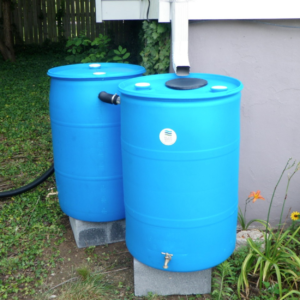
Rainwater Harvesting
Rainwater harvesting reduces runoff volume. Rain barrels can be used as an outdoor water supply for irrigation, car washing and more.
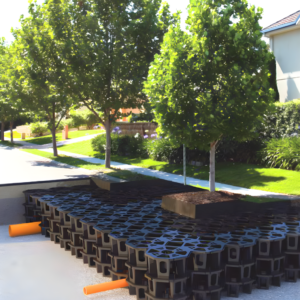
Subsurface Storage
These systems are designed to retain stormwater between storm events, and slowly discharge it into the soil or other facilities.
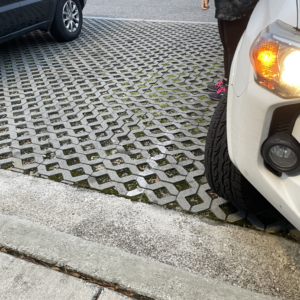
Permeable Paving
You can drive, park, or walk on permeable paving. The various gradient of
layers below work to slow and capture rainwater so that it can soak into the native soil below.
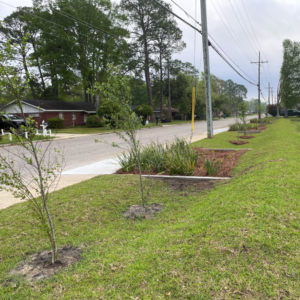
Bio-Swale
An open, gently sloped, vegetated channel
with subsurface layers of soil and gravel to promote infiltration into the natural soils.
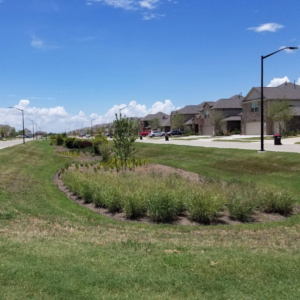
Dry Swale
An open grassed convenance channel that
filters, spreads, and detains stormwater runoff as it moves downstream.
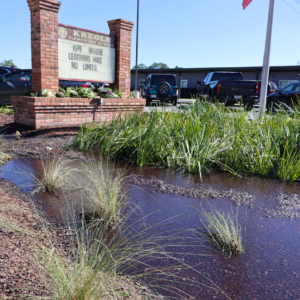
Rain Garden
A rain garden is a planted depression designed to accept stormwater runoff from adjacent surfaces, but not hold it for more than 24 hours.
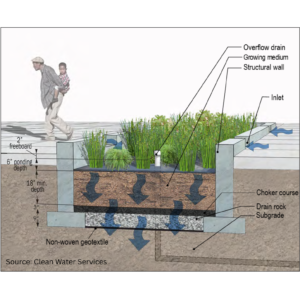
Flow-Through Planter
Stormwater is directed to the planter via curb cuts or a disconnected downspout. The vegetation in the planter will work to clean or ‘treat’ runoff.